The Poor Fellow-Magi
of Oldcross House
“The entirety of human history can be characterised by our general misuse of powers we do not and cannot understand.”
Oldcross House
"You’ve heard the rumours of Oldcross House. Nesting in the Pillars of Ishgard, it hangs in a cloud of myth and superstition, like the one about the room filled with light or the labyrinth of winding corridors that stretch far beyond the foundation’s reach — that eat you if you lose your way. You’ve heard how its many doors can open at strange, impossible angles if one merely provides the right key, if one has learned how to move sideways. Or how certain rhythms and sounds become codified in its laws, become sacred or profane — some redacted, others censored, others required. Maybe you’ve even heard about the Vicar of Oldcross and his Council of Sophia — the collection of great, mystical minds that determine the aged society’s inscrutable direction?"‘But have you seen them,’ the children ask with jack-o-lantern grins and eyes that shine like stars. They weave a fairy tale populated with strange, abhuman shapes — stooped, shambling between windows. They spin the thread back and forth, round and round and coughing all the while. A pair of young, romantic seminarians overhearing their tales, pick up that thread next and talk about bodies twisted by sin, by too much knowing, by knowledge it was never built to bear— but they’re just children, they say, and only children give stock to such fantasies, isn’t that so? Isn’t it?"
An Overview
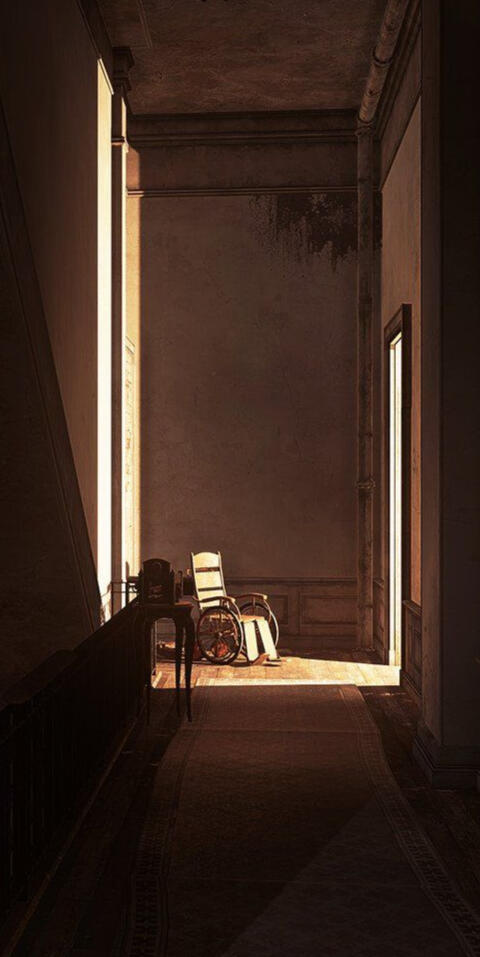
The Poor Fellow-Magi of St. Saerwyth and the Order at Oldcross House is a secret, fraternal order and occult society, organised as a quasi-knighthood, and characterised as cutthroat, ceremonial, and elitist.It maintains a legitimate (albeit exclusive) cover as the Oldcross Theological Society - an ecclesiastical organisation in Ishgard with close ties to the defunct Holy See and current orthodoxy - which meets at Oldcross House under the pretence of discussing theological interpretations on canon, religious law, and the will of God, as a way to smokescreen their eclectic goals chiefly concerned with hoarding their occult knowledge and cosmological mysteries.As a hallmark of hermetic orders and contrasted with more modern, secular schools of aetherology, it retains a deeply-ceremonial, ritualistic sense of pageantry and tradition.
Flavour & Atmospheric Guidelines
Lore-adjacent, not lore strict. Although the Order is anchored in the lore of Hydaelyn, the writers behind its creation value creativity, artistic license, and flexibility. We still prefer to participate in stories rooted in the world of FFXIV, but given some of the subject matter explored by the very nature of the guild, occasionally our love of worldbuilding and headcanon might not sit well with more staunch fans.
You are a Little Guy. The writer behind Oldcross tends towards horror over traditional fantasy, and as such atmosphere and tone are quite important to me! You can be a pretty accomplished wizard, but the Sophists at the top (npc's) are wizards of incomprensible, near-inhuman power that you’ve probably never seen - and the same goes for much of the upper echelons. We will be inhabiting the lowest rungs of the society, and as such, 'power level' should be kept to mortal limits (caveats for entities), and knowledge should be scarce and frustrating to find.
You are a fellow, not an employee. Oldcross is a secret society, not a business or military, and as such is a semi-non-hierarchical system. It has its leaders and ranking members, but you most likely don't have a supervisor or someone regularly giving you orders. You can come and go as you please. No one cares so long as you aren’t spreading their secrets. Ultimately, though, there are a lot of powerful, cutthroat wizards here, and if a ranking member directly tells you to do something, although you can 'technically' ignore the command by the rules of the Order, there’s a fair chance they will not make that a fun experience for you.
You want to be here (probably). Most fellows desperately want to be part of Oldcross. You bled through your trials to get here because being in the Order means you stand shoulder-to-shoulder with some of the brightest, sharpest, most well-connected and powerful wizards in the known world. You don't generally force someone to join a secret society, that's a good way to ensure it doesn't stay secret for long...
You can stomach oppression and injustice. Order magi often make use of oppressed species and populations such as sigrots (a kind of arcane-focused subspecies of goblins), golems / simulated life with advanced sentience, and… each other. Ritualistic experimentation on these people also occur.
In defense of secrecy. To the general public, the Order does not exist. The body of scholars headquartered at Oldcross House is certainly not an arcane or occult order, but instead a theological society that discusses canon religious law and the interpretation of god's will, nothing more. Postulants are extensively vetted before working through a series of harrowing trials for months just to join the organisation properly, and their secrecy is further enforced by their ruthless 'Doormen.'
Ranks of Mastery
Although Oldcross ranks appear knightly in theme, this is purely ceremonial and its members could not be further from the armoured, chivalric image this word conjures.Furthermore, it is exceedingly rare for a member to ascend higher than that of a 'fellow,' with anything above Knights Philosophus being strictly out-of-play and relegated to NPCs to: a.) focus on telling stories about the 'little guys' in a large, complex, and incomprehensible society, and b.) illustrate that, by the time a person reaches a Knight of the East and West, they've already begun divorcing from reality and being too inhuman and emotionally-divorced to still be playable.
The Ateliers
The rank of Knight Philosophus marks the point at which a member of Oldcross begins to wield real political influence due to their ability to elevate up to three knights practicus to serve them.Due to this, flocks of rank-and-file fellows seeking protection, advancement, and proximity to power begin to coalesce into informal factions around them, creating what is colloquially referred to as an 'atelier.' These ateliers function both as political bases and as pools of labour for research, errands, and influence-building, and are commonly referred to by their patron Philosophus' name (e.g., So-and-So’s Atelier).
novitiates
ㅤ— Postulant —ㅤ
To be considered for the order, you must be sponsored by a Knights Philosophus. Most members of the Order are from lineage — a relative will notice your potential and sponsor you — but on rare occasions, someone's talent is noticed from one of the schools they fund, or through field work, but either way that sponsor is still required. Once interest is gauged, they will encourage a postulant to begin preparing for, working towards, and completing three trials that are required for full membership.ㅤ— Initiate of the First Gate —ㅤ
A trial of water. A sacrifice of the self. Baptism. First brush of Oneness. This rank is achieved after completion.ㅤ— Initiate of the Second Gate —ㅤ
A trial of fire. A sacrifice of another. And of transformation. This rank is achieved after completion.ㅤ— Initiate of the Third Gate —ㅤ
A trial of blood. You will drink It. Pure, undiluted, perfect as the sludge of creation you were born from. And then you will use it to set fire to something you love dearest. This rank is achieved after completion.
magi
ㅤ— Fellow —ㅤ
Once a postulant has completed their three trials, they must eventually make their way to Oldcross house to be ritually sworn in. There is no time limit for this, some magi are so deep in their work that they don't officially become Fellows for years, but it's always waiting for them.ㅤ— Knight Practicus —ㅤ
A Fellow becomes a Practicus when a Knights Philosophus chooses them as one of their direct aids, apprentices, assistants, et cetera. A Knights Philosophus can have up to three official Practica at any given time.ㅤ— Knight Philosophus —ㅤ
To become a Philosophus, a Practicus must provide some great arcane achievement to the organisation or spy on another organisation, the benefit of either must be appraised and approved by a Banneret of the Sacred Seal. Before taking the espionage route, however, they must be given approval from their mentoring Philosophus. A mentor has a vested interest in their student's success, as it would mean having a peer politically loyal to them.
enlightened
ㅤ— Knight of the East and West —ㅤ
In Oldcross House, there is a door to the East, and a door to the West. To reach this rank, you must go through each one, close the door, and come back. ‘That is all.’ And yet only about twelve percent ever make it through the first one, and only around five make it through both. Additionally, this is the point where most magi begin receding from public view and generally unhinging from social life as something they start to see as altogether insignificant.ㅤ— Banneret of the Sacred Seal —ㅤ
When either a Sophist or an agreed majority from the Diet of Hierophants agree that a new Banneret is needed, they will gather the current Bannerets together and each will elect a champion from the pool of Knights of the East and West and have them run a series of trials to determine the new Banneret. Usually the individuals who actually oversee projects, facilities, initiatives, and so forth.ㅤ— Knight Hierophant —ㅤ
Chosen by Council of Sophia majority. Even approximate numbers or purpose is uncertain.ㅤ— Padishah of the Will —ㅤ
A single person. Ensures practices, rituals, ceremonies, and traditions are kept; they are allowed to elect three specialised bannerets to act as their deputies. Elected from within the Diet of Hierophants.
ascended
ㅤ— Council of Sophia —ㅤ
When either a Sophist or an agreed majority from the Diet of Hierophants agree that a new Banneret is needed, they will gather the current Bannerets together and each will elect a champion from the pool of Knights of the East and West and have them run a series of trials to determine the new Banneret. Usually the individuals who actually oversee projects, facilities, initiatives, and so forth.
other
ㅤ— Doorman —ㅤ
Specialised fixers, assistants, agents, and general boogeymen that exist outside the usual structure and primarily serve to keep the secrets of Oldcross... secret; although they technically only answer to the Council of Sophia, the Sophists themselves don't go particularly out of their way to protect them.ㅤ— Locksmith —ㅤ
What all Doormen eventually become, for those few years when the song and sound becomes strong enough that they learn how to make keys, but not so strong that they lose who and what they are.
Laws of Mythopoeia
"...it's a cornerstone force in magic, derived and given form through belief and the ability of mankin minds to impose that belief on reality. When you weave with the arcane, you are... in a sense, creating minor myths and miracles: stories that originally may or may not have been true, but you've convinced or bargained or coerced reality into seeing things your way. You could say that some forms of magic are really just lies told so well that even reality buys into it. It's all about learning the imperfections of the cosmos' memory. After all, if you win the metaphorical debate, there's no difference between the reality that was and the reality that now is, so much so that it Becomes recursively: always so."
—Knight Philosophus Solomon Page
law of correspondence
"As above, so below."
Reality is not composed of isolated strata, but of repeating structures at different scales, expressed fractally: the motions of stars echo in blood, the architecture of nations repeats in the body, and the soul is not a metaphor but a smaller iteration of the world. Correspondence magic, when performed correctly, should feel inevitable: you aren't forcibly imposing your will on reality, but instead simply revealing the way it already wanted to behave, and giving it the permission to do so.
law of sympathy
"Like affects like."
Similarity is not superficial but instead a sign of shared essence; things resemble one another because they emerge from the same metaphysical source; to act upon one is to disturb the underlying quality they both express. Sympathetic magic is about family pressure whereby the magus persuades reality by appealing to kinship.
law of contagion
"Intimacy outlives distance."
Because time and distance are often an illusion, sustained contact with an object establishes a permanent metaphysical relationship with it unless explicitly and intentionally severed through ritualistic means. The universe is a tireless lover that aches for harmony, for intimacy, for oneness, and it is not often willing to let things go so easily. Magic operating under the law of contagion is all about using history and context to remind a thing that it's past is never gone, merely forgotten.
law of names
"Definition anchors dominion."
A name is both compressed definition and anchor - points where meaning crystallizes and fixes identity in a fluid universe that would otherwise allow endless drift. When a mage names something correctly, they are not commanding it, but are instead agreeing with it so precisely that disagreement becomes impossible, becomes unwriting. To know a true name is to know how a thing understands itself, but even false names, if used consistently and en masse, can still carry potency because reality prefers coherence over truth.
law of will
"Power flows where intent is unbroken."
Will is more about the coherence of purpose over time than brief, flickering desire. The universe is filled with competing intentions and many of those cancel one another out, but magic rewards the sustained pressure gradient of a mind that does not fracture under doubt, contradiction, or fear. This law explains why discipline outperforms talent, and obsession outperforms brilliance.
law of thresholds
"Power gathers at crossings."
Magic exploits indecision. Moments and places of transition where one state becomes another are zones of ontological looseness where reality has not yet decided what it is. In crossings, thresholds, and liminal spaces where thousands of ideas are constantly passing through, the world is already negotiating with itself. The mage simply joins the argument. This is why rites cluster around beginnings, endings, initiations, wounds, and borders: change is easiest where change is already occurring.
law of form
"Shape governs function."
Form is not merely cosmetic and meaning emerges not from freedom, but from limitation. The structures imposed on a Work via geometry, posture, and pattern tell power how to move and behave, and create potency through the congruity of form and essence.
law of custody
"Secrecy preserves potency."
Knowledge diffuses when shared as each retelling introduces variation, skepticism, and misuse that further confuses its design. Silence concentrates meaning and gives it its sharpness, whereas forcing it to accomodate all interpretations leave it dull.
law of recurrence
"The cosmos is a forest; our magic makes the path."
Reality learns: each event leaves a faint trace, creates a preference, whispers a suggestion. Repetition codifies miracles into Law.
law of dissolution & reconstitution
"To remake, first unmake."
Every alchemist knows that incompleteness is a necessary phase, not a failure, and every Ruling King must learn that this, too, is the thermodynamics of the soul. Transformation requires loss of structure as old forms resist change and must be broken down into its basic components to be reformed without impurities.
law of witness
"Many minds, one horizon."
The cosmos is a single, continuous being in the act of becoming, and humans are not external observers of this whole, but localized points at which the universe becomes aware of itself. To have them witness, then, is to participate in meaning, to be the apparatus by which it collapses the potentiality of reality into narrative, thus forcing the universe into consensus with itself. A practitioner must take care with their chosen witnesses, then, since an observer contributes interpretation, memory, and expectation to the Work, adding unique colour and texture, and so: many minds, one horizon.
law of sacrifice
"Sacrifice repeats the first story."
The full depth of Sacrifice is either poorly understood or incomprehensibly layered. In some situations, it operates as the spiritual analogue to the alchemist’s equivalent exchange: reality abhors incongruity and so to get you must first give. In other traditions, it exists to violate boundaries and fray the structure of reality and thus make it more malleable. It compresses meaning, focus, and intensity to generate metaphysical density. And this, of course, adds gravity and prestige to the narrative-driven cosmos we belong to.
The Council of Sophia
The Council of Sophia acts as the governing body of the Order and holds biannual meetings within Oldcross House’s Chamber of Magi. The following characters are NPCs, and due to the intense stratification and our emphasis on lower-ranking members, most characters will have never met any of them.
SOLOMON GOODHEART
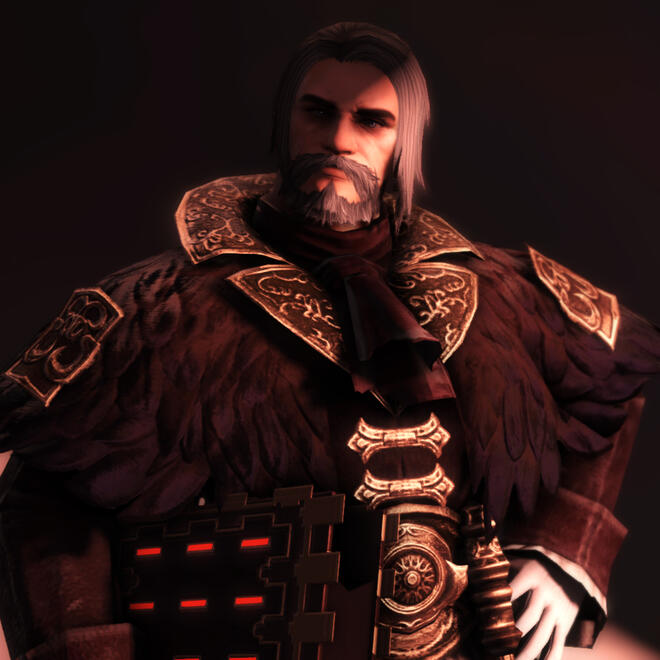
Solomon Goodheart acts as the public face of the organisation and supplies his official, Ishgardian title – the Vicar of Oldcross – to add legitimacy to their actions. Socially, he conducts himself with a kind, genteel nature: always eager to put those around him at ease and in good spirits with soft-spoken sincerity, and always ready to carry himself with the dignity of Oldcross – or to license the many dark deeds necessary to protect it.
HESTER HUXLEY
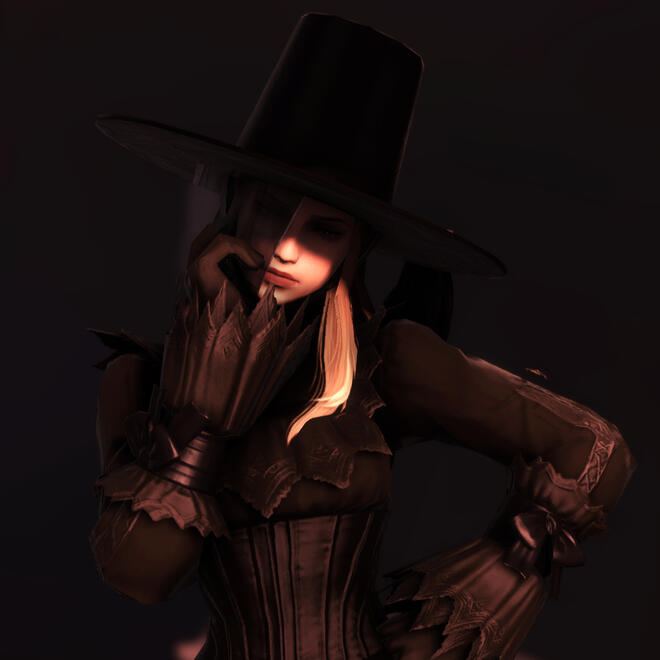
“I am what the magnanimous Monsieur Goodheart pretends not to be,” thus spoke Lady Huxley to her colleague, Ymbolet Pomeroy, when he asked her, quite sarcastically, who exactly she thought she was that set her above the rules. “That is to say, Monsieur Pomeroy, that I am a wizard– and a damn good one, and as a damn good one, I have learned what every wizard must eventually learn: you can be a good wizard, or a good person. Not both.”
ENGUERRAN CALVET
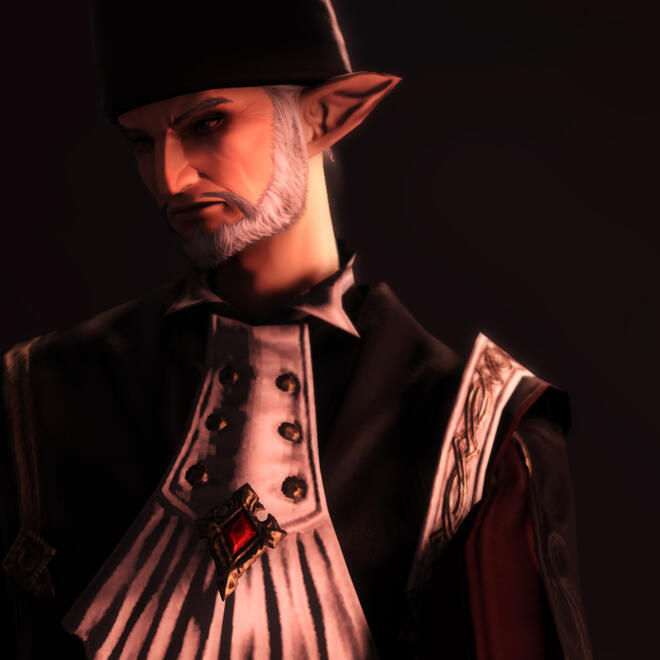
It is a rare few who ever come face-to-face with God, and that is perhaps a courtesy— one that Enguerran Calvet wishes had been extended to him. Instead, when his curiosity pierced the veil too deeply, it irreparably shattered his mind and left it as the fragmented state it still lingers in today. Only his routine gives him solace: overseeing the Oraculum of Lesions, listening to the pulse and hum of the House. It isn’t a safe place for people, but in some strange, unexplainable way, he says it feels like home.
LUCIUS GENTLE
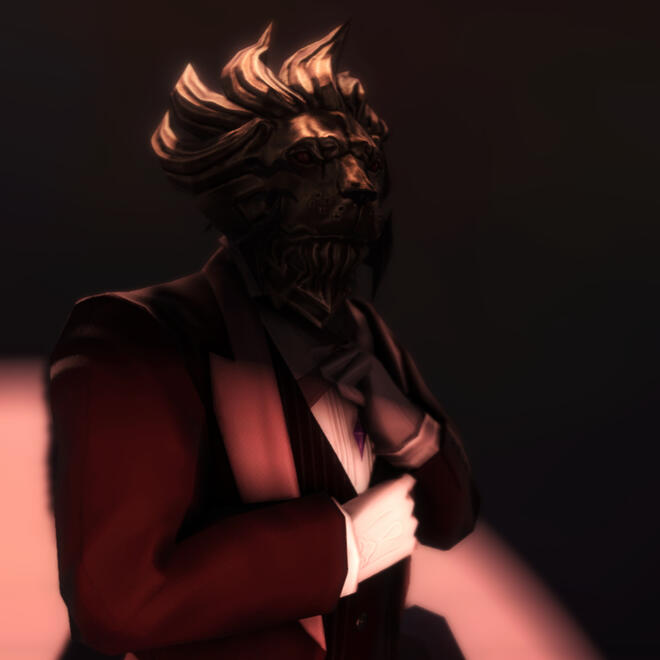
Quiet and soft-spoken, Monsieur Gentle’s most noteworthy characteristic is the brass lionshead that he always wears, leaving many to question what he’s hiding beneath it. Beyond this, he is considered one of the more helpful Sophists if one manages to catch him out in public, revealing for anyone interested, an encyclopedic knowledge of aetherological rituals in pre-Mhigo Gyr Abania and their contemporary applications.
AURELIUS MAGNUS
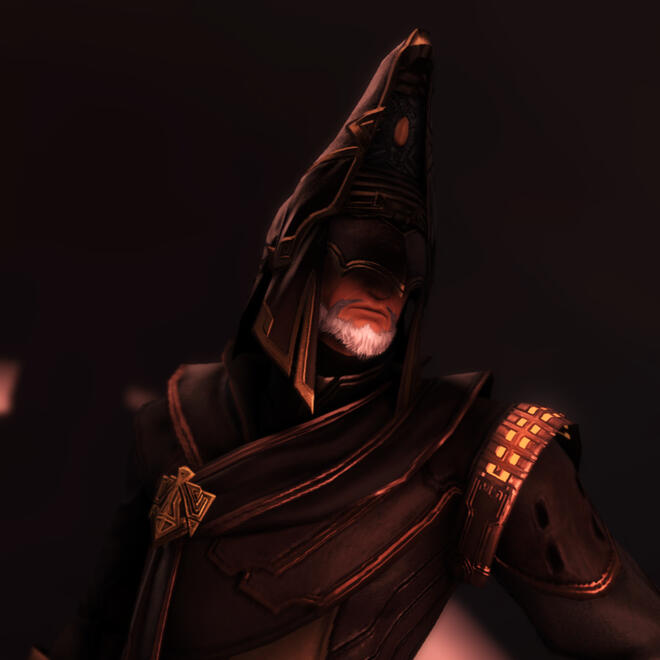
Aurelius Magnus likens his tenure with the council to a child buying a new puppy: a Garlean with any magical ability at all is a charming, entertaining diversion, but like the child and the puppy, it’s one they’ll eventually tire of. He is a crotchety, dour perfectionist who finds magitek schematics more personable than most people, and whose origins as an aether-using Garlean remains a mystery to all.
YMBOLET POMEROY
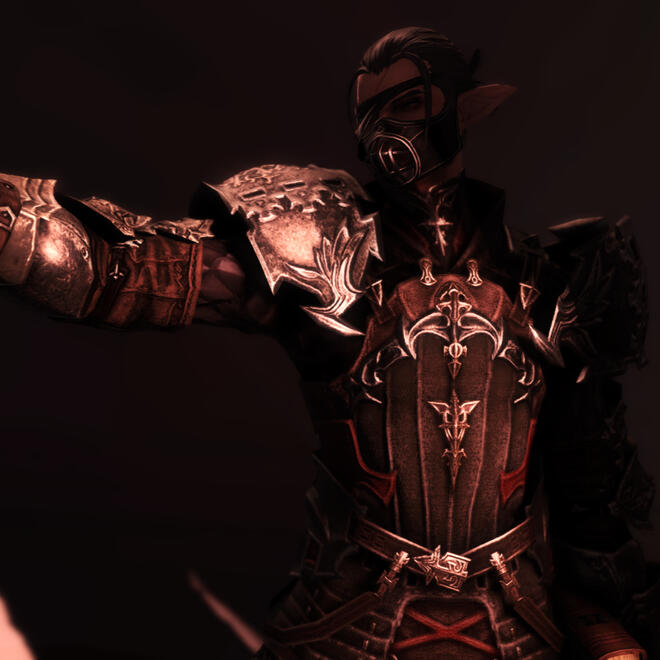
As a knight of Ishgard, Ymbolet Pomeroy sets himself apart from most of his peers, both by nature and choice; he believes most of his peers are moral degenerates. The path that led him into the arms of the Order was the tired tale of the lawman willing to forsake his piety in order to more efficiently persecute wickedness, and one who never realised how he’d walked right into its jaws or how it’s been slowly digesting him for decades.
FERULA WAITE
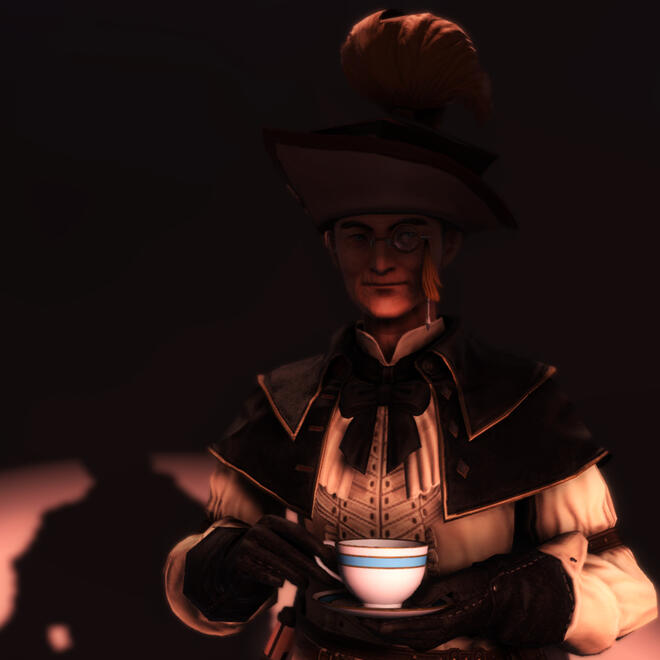
Age is a nebulous concept within the Council of Sophia. There are few who would expect the kindly (if occasionally crotchety), old Ferula Waite to be one of its youngest members, who still extends her life with their guarded longevity magic, but not her beauty as: "there is little room for being both a wizard and a young woman; no one bothers me now, and I can focus on my work." And no one would question the value of her work: a kind of kinetic magic, utilising bodily movement and dance, to bend, shape, and break reality all around her. She even has a dance studio and a number of promising protégés.
FALAN FILAN
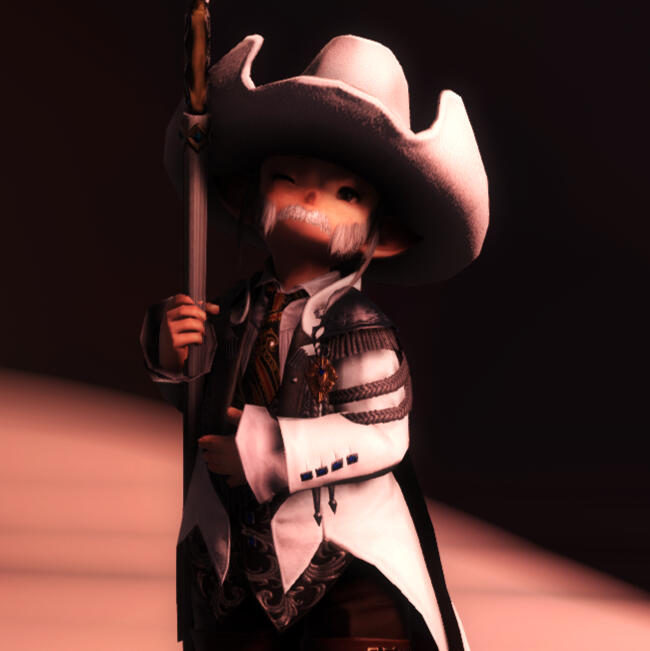
An Ul'dahn magnate, member of the Syndicate, and ceruleum baron, Falan Filan is, like Magnus, an unusual black sheep among the council, and as such has built a long-standing friendship with his peer. Compared to most of the other Sophists, he sees Monsieur Magnus and himself as the only 'down-to-earth' folks compared to the rest who've 'cracked their skulls on the top of the ivory tower.' According to the rumours, he used to work for Godwyn & Smythe before things went south and has been a large source of the order's knowledge on their rival.
The 'Goodheart' Doormen
Solomon Goodheart, a premier Sophist on that council, is more socially-minded than most of his peers and as such the Doormen in his pockets tend to be more sociable with seemingly-vested interest in the success of lower-ranking fellows.
SAMUEL HOWLER
NPC
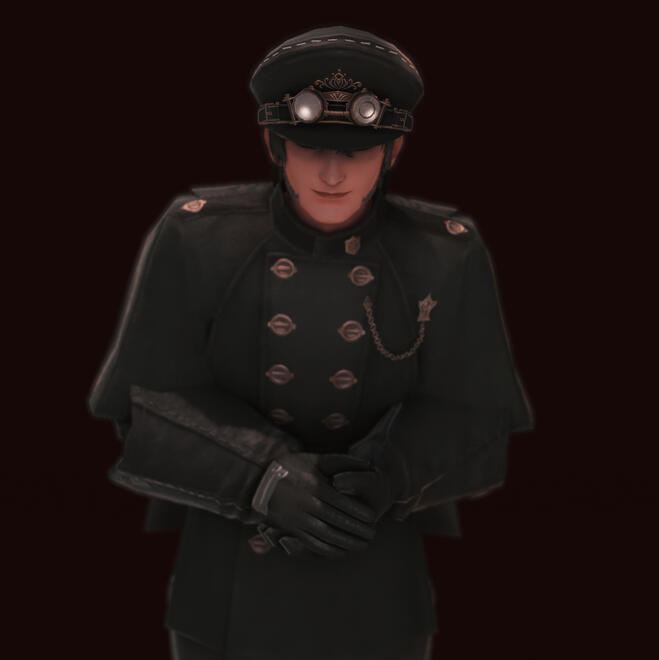
The footman and chaffeur to the vicar of Oldcross. A Doorman among Doormen. There are few things that move in and out of the House without him knowing, and few undertakings by its magi diasporas that he couldn't find out.
ADELINE CROWE
PC
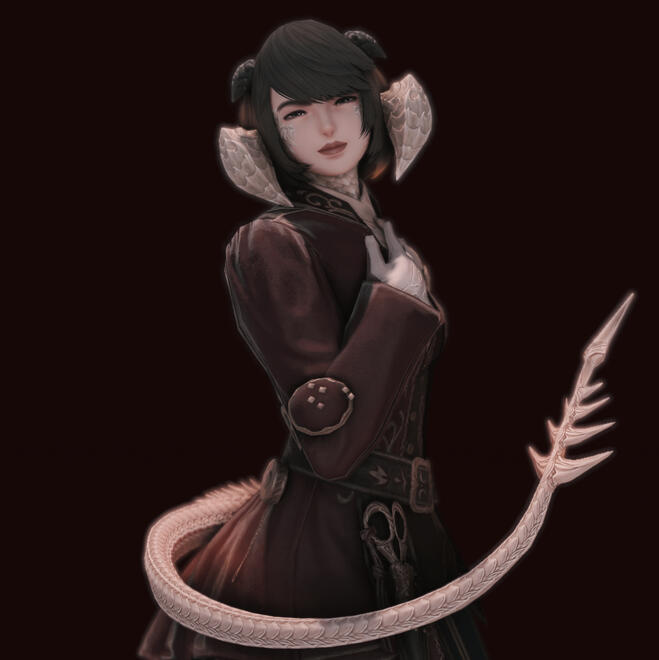
Mister Howler's informal understudy. She doesn't necessarily have his level of charm, but makes up for it in firm fairness and efficiency. Additionally, she's taken an active interest in Ser Page's current endeavours. She's often on the road.
THOMAS & EDNA DROWLEY
NPC
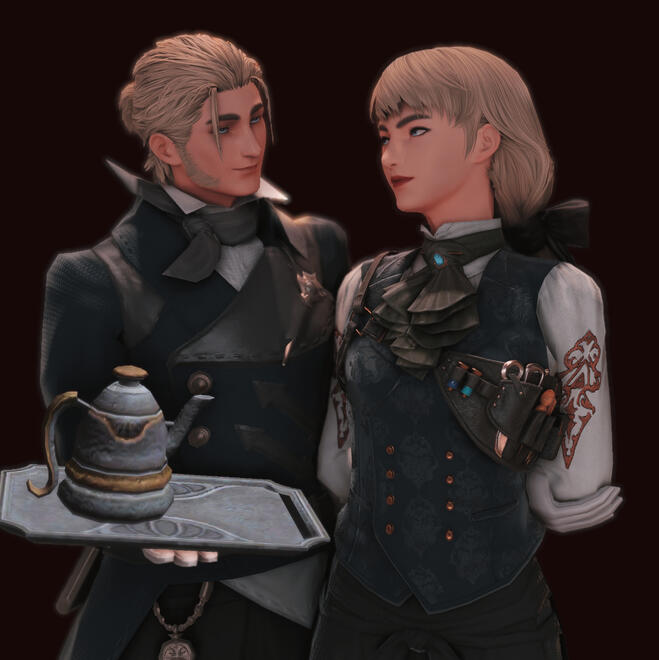
Thomas and Edna Drowley are a package pair of Doormen that act as yet another set of vicarage footmen. Most associates are unsure if their shared last name indicates they're siblings, married, or plain coincidence; they never correct people either way.
ISHME-ANU ILU
PC
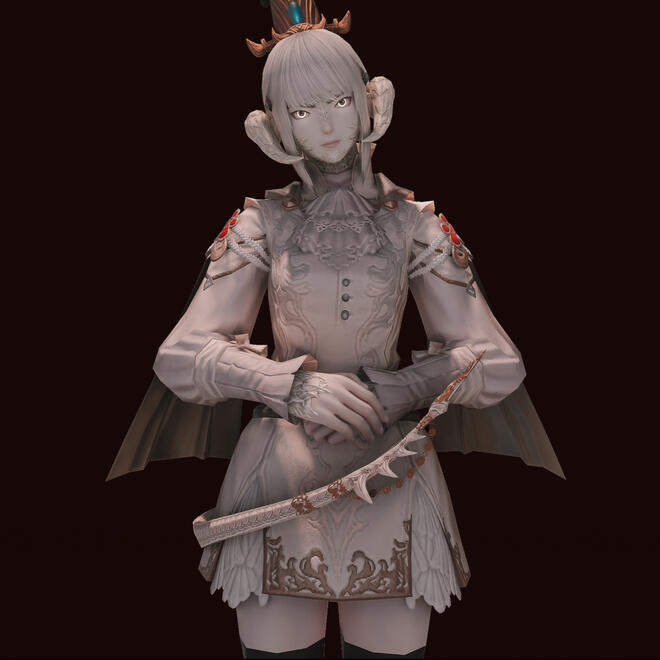
Amdapori golem exhibiting phenomenal sentience (with some unusual 'quirks'). Not really a Doorman in any technical sense, more like their occasional helper since his design was built with tonal resonance in mind. Travels with Miss Crowe often.
The Fronts & Faces
As a secretive organisation, the Order operates under a handful of far more legitimate aliases, including charitable foundations, bureaus of authority, and fellowships. Generally-speaking, any of these can be used for any of our magi at any given point to give a false reason for why they're conducting the work they are. It's best to use the one that makes the most sense to realistically be in the area / covering for the thing you're doing.
THE OLDCROSS THEOLOGICAL SOCIETY
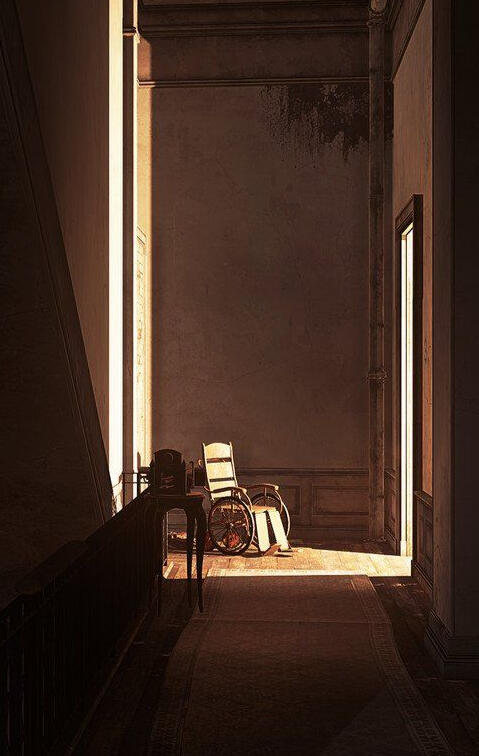
The theological society officially headquartered at Oldcross, it has a long-standing tradition of soft-support for the Holy See and the orthodoxy while establishing itself as both an enthusiastic and compliant body of religious thinkers and astrologians working to debate and further their understanding on the will of God. As a front, this enabled their ability to search for arcane mysteries and secrets under the guise of witchcraft investigations and theocratic authority. Considering the Order's interest and emphasis on Oldcross House, the (led by Vicar Goodheart himself) is often unofficially considered the primary face and headquarters for the order as a whole.
THE PHIL. SOCIETY OF STANDARDISED GRAMMER & RHETORIC
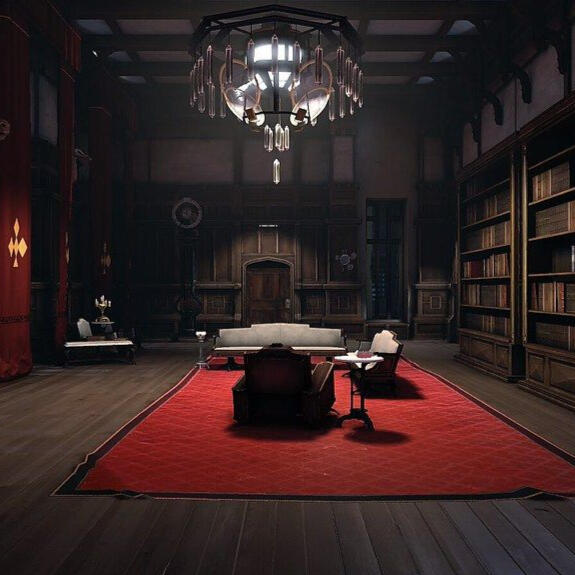
An Eorzean guild with chapter-houses in each of the major city-states on the continent, the Philanthropic Society of Standardised Grammar & Rhetoric visits countless libraries (public, private, and personal) and provides scribe services to copy and make corrections (grammar and academic) as required. The front provides an explanation for travel and an excuse to thumb through libraries for hours on end, many that no one else ever gets to see. If there is a book there that Oldcross would want, they report it and after a long enough time has elapsed, someone will go 'retrieve' it.
THE BUREAU OF CULTURAL OBSERVATION AND PRESERVATION
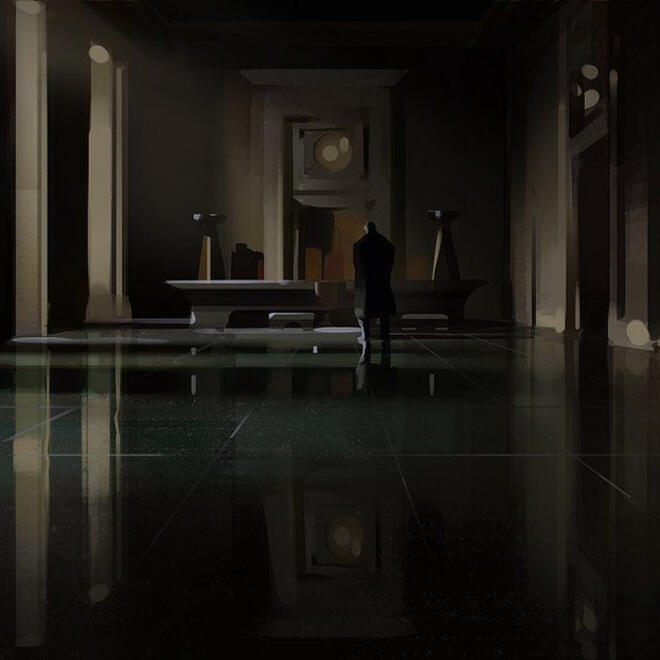
Although Oldcross House is in Ishgard, many of its influential members are either citizens or who have vested interests in the knowledge capital of Sharlayan. The Bureau has close ties with the Bibliothec as a propaganda machine to ensure that proprietary and national knowledge and rhetoric didn't reach places they didn't want it to. The people behind its conception were either members of the Order, or favours to them, with its real goal to monitor for people trying to spread information on their existence, or knowledge that they'd rather keep to themselves.
THE GOODHEART FOUNDATION
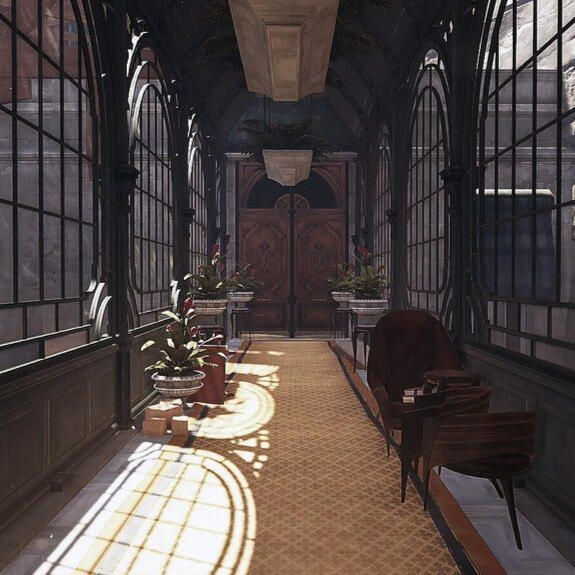
A private, charitable foundation started by the Monsieur Goodheart, it raises money for and directly administers several boarding schools, orphanages, and academies to nurture underprivileged potential... while funnelling that potential into the Order, either through their research, or through recruitment.
THE WORSHIPFUL COMPANY OF DWIMMER-REEVES
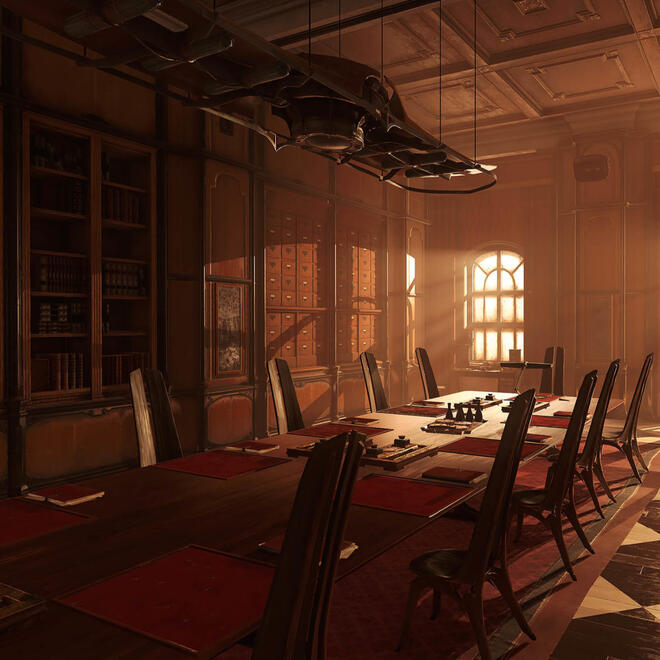
Regulated and subsidised by the Eorzean Alliance, Dwimmer-reeves are one of its outsourced solution to arcane problems. Although their most sensational and therefore public reputation tends to be as witch-hunters and magi-jailers, the bulk of their work is quite dull and bureaucratic: going door-to-door to extensively catalogue and licence objects of power and certain, proscribed texts; delivering subpoenas or fine collection notices; and maintaining the sprawling archives that house both of these.
ADMIRALTY ACADEMY OF ARCANIMA & NATURAL PHILOSOPHY
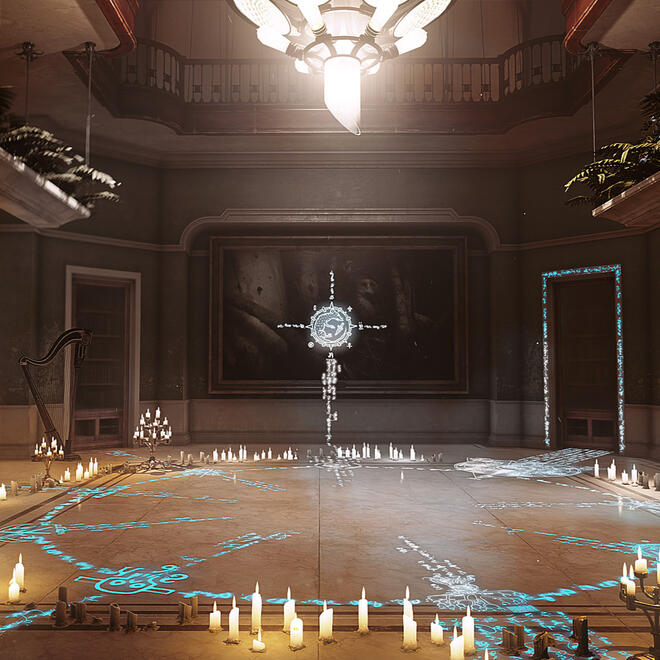
Commonly shortened to the Admiralty Academy of Arcanima or simply 'Triple A' by its students, the Academy is a Lominsan institution of higher learning with close ties to the Admiralty's Navy, Mealvaan's Gate, and the Nymian Restoration Society. The wealthiest or most talented of Vylbrand's arcanist hopefuls attend Triple A as a far more rigorous, prestigious, and thorough understanding of arcanima. Although not a direct front to Oldcross, it provides sizeable donations to it via the Goodheart Foundation, and often uses it to talent scout prospective members.
Thresholds & Doors
"One should never step through a Door lightly; there’s no guarantee it’ll lead to the same place twice."
Thresholds (sometimes referred to as Shores) are any space operating beyond our own dimensional framework or that of one of Hydaelyn's 'Shards,' while Doors are the places in our reality that are frayed enough to connect to one of these spaces if the right sympathetic charge is applied. When passing through a Door into a Threshold, the intermediary space during the transition is referred to as the 'Prima Materia.' This document will detail information regarding these concepts. Most magi do not work with these systems.
On Doors: Expanded
To the average person, a Door is difficult to detect let alone pinpoint. As you might expect, they don’t look like the door of a house, and in most situations they rarely look like anything at all. In rare and particularly potent cases, there might be some minor sensory cue — a bending of the light, an accretion disk, an occasional slip of sound or feeling beneath the skin, a hairline fracture in space — but most could be ripped right into the Grand Square of the Sublime House of Ul’dah (and, in fact, one is), and the hundreds of people that mill by it daily would remain entirely unaware of its existence. This is partly due to them being quite small in the Source — nearly-microscopic pinpricks that must be forcibly stretched open by some ritualistic series of stimuli, like a lock and a key (and we’re beginning to see why they’re called Doormen and Locksmiths). None of this means they cannot hurt you.It’s also worth noting that the above information is only necessarily true of the Source (also known as Origin by the Order). Every adjoining Threshold is its own universe with its own laws of physics, and although the Source prefers to handle hers like a proud cat trying to hide its wound (or a protective mother steering you away from something that will hurt), the same hole on the other side might look vastly different and has a limitless range of diversity. Some remain just as subtle or manifest almost entirely as sound while others present themselves as equations in your head or are made of colours that don’t exist.Oldcross, as a Threshold, is seemingly polite and inclusive about the subject, insofar as those that appear within it do, in fact, look like a door appearing suddenly in a hallway that wasn’t there before. Usually, they’re even fitted naturally into the wall. Usually. Sometimes they’re a trapdoor on the floor or a full door on the ceiling or floating a few inches off the ground and off from the wall, but it does try so hard to get it right.
Threshold Hazards
free agents.
Although many Oldcross magi pride themselves on being the foremost, pioneering scholars in this field of study, it has been observed that they are not the only ones capable of traversing the Prima Materia. Be on the lookout for G&S OCULUS agents.
dimensional collapse.
Dimensions can sometimes simply cease to exist. This can happen with no perceptible warning and, seemingly, instantaneously. In fact, it's such a poorly understood phenomenon that our only 'live' example that we know for certain was one (as opposed to us simply 'losing' said dimension and being unable to reconnect with it), is due to a 'miraculous' coincidence where one of our agent's were stepping through the door back into Oldcross House nearly at the same moment, resulting in around 18% of him ceasing to exist (in what turned out to be an awful mess for the cleaning staff to mop up). It is unknown what happens to whole individuals still stuck inside a dimension when this occurs.
Interference.
Although this was initially referred to as 'Hostility,' it was decided that the phrase was misleading, as it implies an entity must wish harm on the individual for it to present danger. However, there are many instances of Interference from entities which do not even appear to recognise our existence, and yet cause great harm to personnel by the nature of their existence. Currently, there is a motion within the Council of Sophia to rename this to the even less willful 'Toxicity'.
learned belief.
The idea that every agent and magus brings his or her own learning into a threshold and believes in the 'reasonable' correctness of that learning. Unfortunately, when moving into a threshold, it is best to do so with the mindset of a newborn. Ex. they have wide, cylindrical, vertical 'trunks' splitting off into irregular, multi-jointed 'branches' ending in clusters of flat, green, lobed, ribbed 'leaves', but the shapes that make up the Turning Wood are not trees and the Order has lost nearly nineteen operatives due to their inability to unlearn this belief.
Oldcross Is A Threshold.
Something even seasoned veterans forget: Oldcross House should not be treated as a home and should not be seen as safe. With the exception of its outer shell, it is a Threshold, and at times an especially 'carnivorous' one. If you don't know where a door goes, do not use it. If you see a new door in a location it hadn't been previously without any of the usual signage, or with signage written in any language other than Eorzean Classical Standard, the Order’s chosen dialect, report it to a Doorman immediately.
Threshold Subtypes
bridge.
Primarily used as a designation for Oldcross House and Kenoma Station, bridges are thresholds that connect to two or more additional ones. Although others have been discovered, they tend to exhibit low temporal stability and collapse.
hall.
A threshold with previous autonomy that has been absorbed and repurposed by Oldcross House.
room.
Oldcross' 'halls' are made up of multiple rooms that follow consistent logic between one another, but may exhibit minor variations; it is believed that the house fragments old thresholds for whatever 'purpose' it needs fulfilled.
novel.
A newly-discovered threshold (time since discovering not exceeding 174 days). Actions taken regarding Novel thresholds have increased security requirements.
shade.
Any threshold that exhibits laws of physics similar to Origin.
echo.
A theoretical threshold with both physical and visual similarities to Origin, one that would appear like a copy or mutation of it.
dwelling.
A threshold discovered to have 'Interferences' (refer to Hazards). Implied for shades and echoes.
quarry.
A threshold deemed exceptionally valuable to the Order, usually due to the presence of intellectual or physical material. If logistically-feasible, these will often have some level of personnel stationed to protect and manage it.
boil.
Similar to an echo, boils are far more limited and common, and the only subtype that we have some understanding on both how they're created and how to destroy them. Instead of linking to another pre-existing threshold, these tend to be pockets within the 'membrane' of our own (hence 'boil'), usually created by some great psychically-traumatic event and which echoes that event in many of its likenesses, either in a literal or symbolic sense. Reducing the amount of rumour and knowledge around it will steadily 'cauterise' the boil by increasing dimensional instability.
novel idiosphere.
An extremely temporal, brief threshold created by a sudden spike in an individual's psychic energy; threshold is centred on the individual's consciousness as opposed to their body which could not fit inside it as they tend to actually be nearly microscopic in size.
known thresholds.
| . | B-1 | Oldcross House (not home) |
| . | B-9 | Kenoma Station |
| . | S-87 | Turning Wood |
| . | Q-33 | Tilted Library |
| . | NQ-91 | The Far Shore |
| . | D-5 | The Lighthouse |
| . | N-19 | Shattered Throne |
| . | D-15 | St. Adeline's Carnivale |